Creating autonomous vehicles (AVs) is a collaborative endeavor. From 2014 to 2020, this is not the work of lone engineers, but of a large industry replete with money, knowledge, technology, and talented people.
Creating a autonomous car requires assembling and mobilizing numerous “allies”—from engineers to marketers—and technologies—from lidar sensors to path-planning algorithms. Each autonomous vehicle company represents a dense and highly diverse network of such elements.

Autonomous vehicles as a sociotechnical ecology

Autonomous vehicles exist as part of a sociotechnical ecology. They arise from the ongoing efforts of multiple actors to intervene and reshape the existing system of relationships. Successful, large-scale, and well-known projects are the result of this extensive work and the support of numerous and diverse partners who form this innovative ecology.
Radical innovation, but not everywhere
Autonomous vehicles are a radical innovation, but not always. Robotaxis do aim to replace human drivers with algorithmic autonomous systems for navigating city centers. The goal of self-driving shuttles, on the other hand, is to integrate into the existing transportation system, not change it.
Driverless vehicle teams often use SUVs as models—the most popular vehicle segment in the US, Europe, and China—thus capitalizing on established user preferences. Even the locations where self-driving vehicle project partners are located are the administrative, innovation, and financial centers of major countries. Thus, while remaining a radical innovation, autonomous vehicles are also oriented toward the status quo, not changing it.
Not only a technical, but a social and economic phenomenon
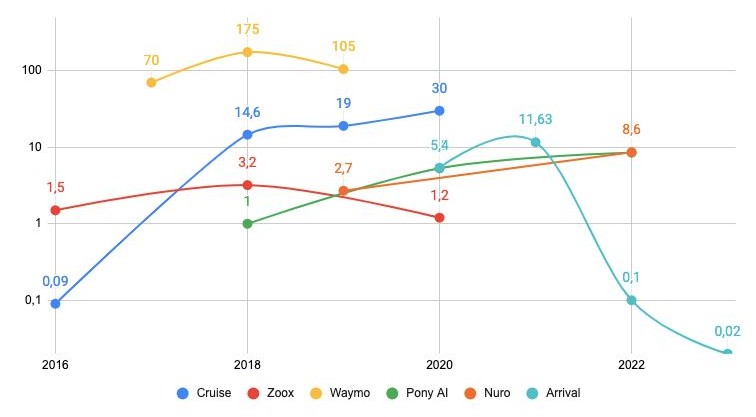
Different types of autonomous vehicles are being developed to meet different needs and conditions. As a result, innovation in the field of autonomous vehicles cannot be limited to a single, one-size-fits-all approach. Furthermore, people who create AVs are crucial, as autonomous vehicles require specialized training and experience. The economics of the autonomous vehicle industry—both potential funding sources and the valuations of the companies themselves—play a crucial role in projects, enabling them to secure the resources needed to implement innovative ideas.
Three types of Autonomous vehicles
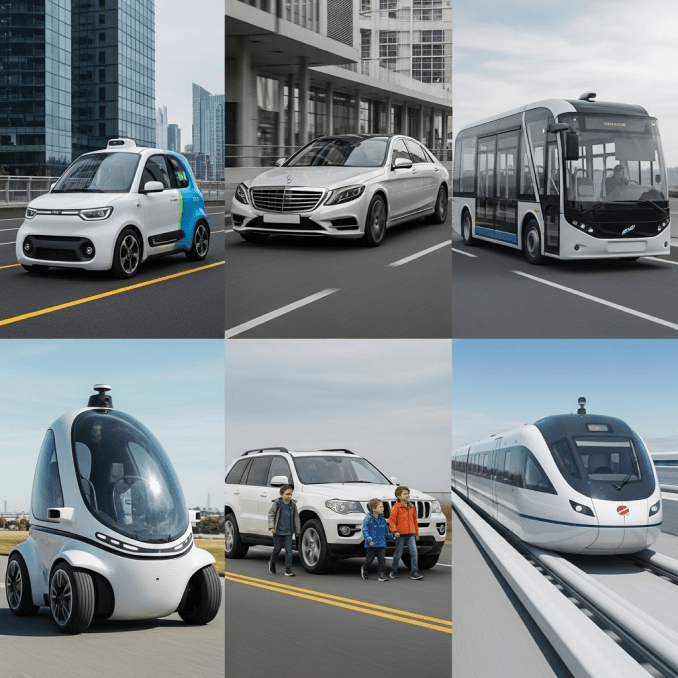
Robotaxis are targeted at densely populated urban areas and car sharing, while shuttles are actively used in closed areas and for last-mile transportation. Personal autonomous vehicles meet the needs of affluent drivers willing to invest in high-tech vehicles.
Companies are emerging that offer alternative innovations: delivery robots (Nuro), virtual rails (Base Track), the transformation of existing vehicles into driverless ones using existing tools (comma.ai), and even smart factories (Arrival).
Evolution of popularity

In 2017, robotaxis became the most popular type of autonomous vehicle. While shuttle projects dominated quantitatively from 2013 to 2015, robotaxis dominated from 2016 to 2020. From the very beginning, the geography of autonomous vehicles was diverse. American projects accounted for the majority, but over time, projects from Europe, Russia, and China emerged.
The rise and fall of interest
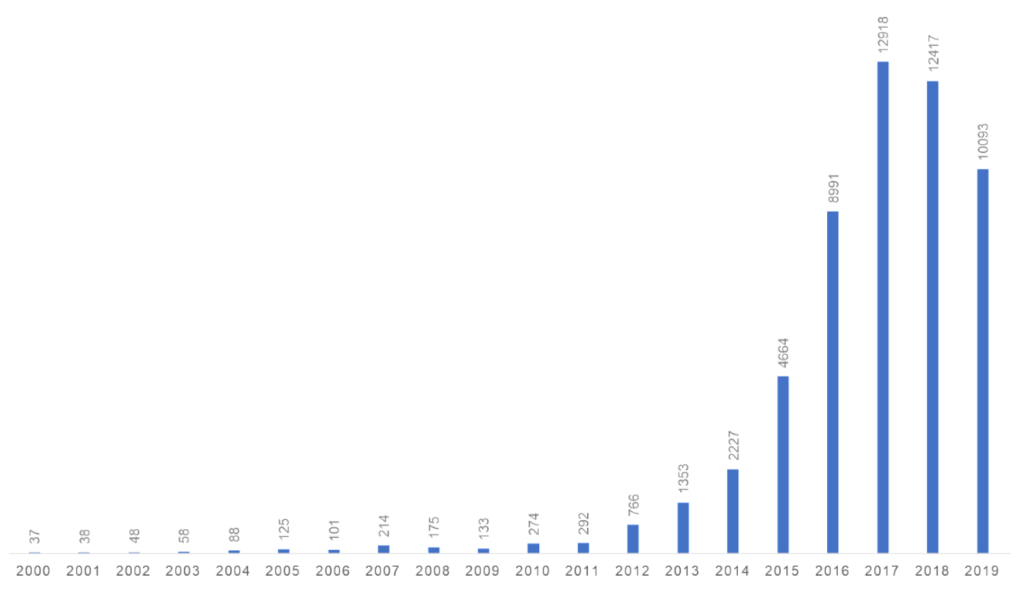
The most active period of discussion about autonomous vehicles and investments in them occurred in 2017–2018. Since then, interest in autonomous vehicles has gradually faded. This is due to accidents with autonomous vehicles, as well as the unfulfilled promises of their makers, who claimed to have hundreds of thousands of safe vehicles on public roads within a few years.
The fading of the hype is not surprising. Gartner’s famous cycle charts show how various technologies reach a certain point of hype, but then interest gradually declines and they become the focus of a limited number of professionals and amateurs.
Furthermore, the development of business intelligence was complicated by the social and economic crisis that arose during the coronavirus pandemic. Many companies suspended their investments in this technology and were forced to focus on more pressing business issues.
Geographical advantage and the future

The advantage lies with those producers who have access to venture capital, educated engineers, tech-optimistic policymakers, and advanced technologies. These are primarily American and Chinese companies. Relying on their “allies,” they can develop AI over a long period, despite the waning hype.
The value of research after the hype
The fading of the hype can also be explained by the fact that the potential for implementing large-scale commercial AVs projects has not yet matured by 2020. Our research tells the story of their development as they transition from a research-based mode to an innovative one.
The history of the autonomous vehicles development helps us understand how hype around a technology is generated, how it impacts social, economic, and technological aspects, and how it eventually fades. This allows us to understand how a radical innovation loses its hype, transitions to a “normal” technology, and eventually becomes part of everyday life.
 MARTA: Картография беспилотных автомобилей