The accident that turned everything upside down
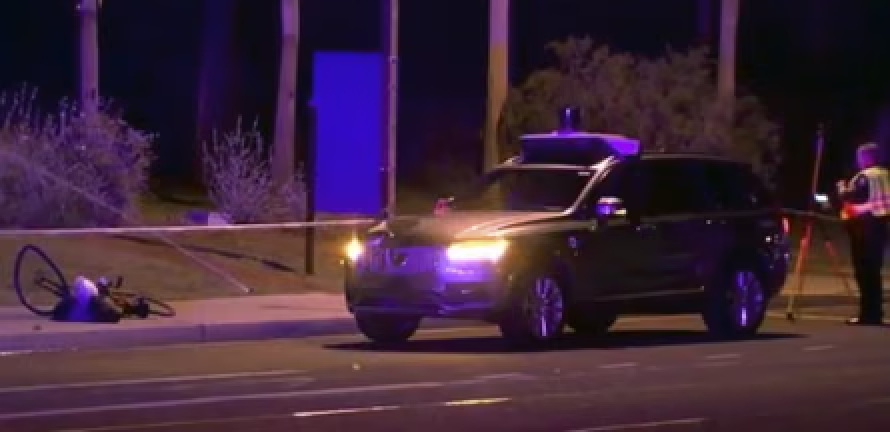
On March 18, 2018, an event occurred in suburban Phoenix that forever changed the history of autonomous transportation: an autonomous Uber car struck and killed pedestrian Elaine Hertzberg. This tragedy sparked a media frenzy—over 200 media outlets worldwide covered the first fatality caused by a autonomous car.
Suddenly, a technology that only yesterday was touted as the inevitable future of transportation found itself under intense public scrutiny. An investigation revealed a confluence of factors that led to the accident: the woman was jaywalking while pushing a bicycle; engineers had reduced the sensitivity of the obstacle detection system; and the test driver was distracted by a tablet.
Despite the ambiguity of the circumstances, the incident became a turning point in the public perception of autonomous driving technology: it exposed systemic vulnerabilities, undermined trust in the developers, and dampened enthusiasm for the technology. Already in 2019, the number of publications about drones decreased by 20% – from 25 to 20 unique news items per day.
From Euphoria to Reality: The Hype Cycle of Autonomous Vehicle
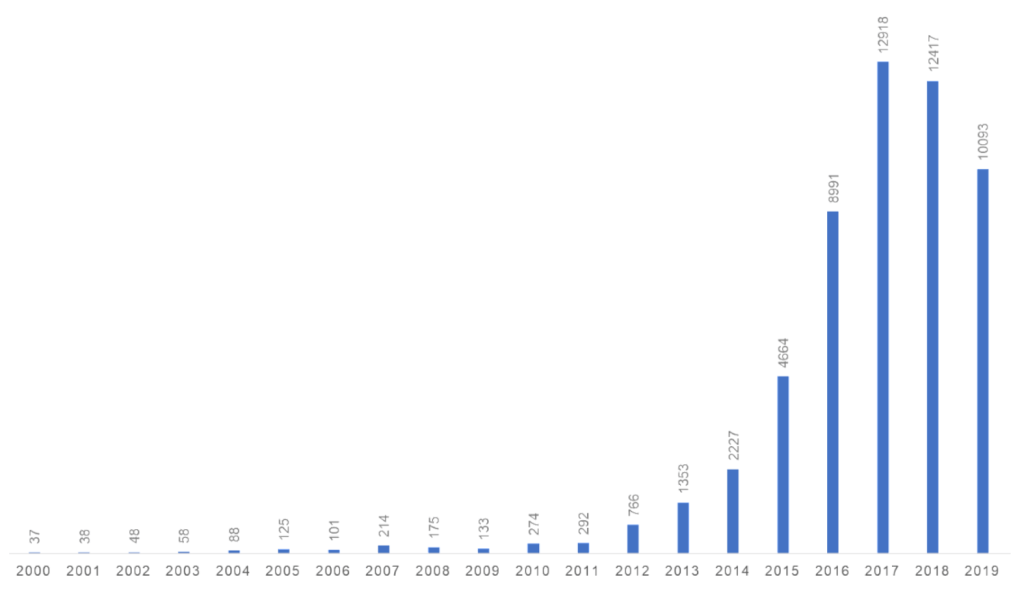
Before the fatal accident in 2018, the number of publications about autonomous driving cars had been steadily growing, peaking in 2017—a period marked by the emergence of numerous new companies in the field and massive investments. Developers confidently promised that fully functional self-driving cars would be on the roads by 2017-2020.
Media interest in driverless cars has followed a classic hype cycle. From 2000 to 2010, publications were few and far between, with occasional surges in 2004, 2005, and 2007, coinciding with the famous DARPA (Defense Advanced Research Projects Agency) Challenges competitions. These competitions, where university teams first demonstrated the viability of autonomous vehicle systems, attracted the attention of commercial companies and sparked the initial media interest.
By the early 2010s, autonomous cars were already being touted as a revolutionary technology poised to completely transform the transportation industry. However, after the Uber crash in 2018, media interest plummeted—the number of publications fell by approximately 20%, from 25 to 20 unique news stories per day, returning to 2016 levels. Manufacturers became much more cautious in their statements and increased their emphasis on safety, while the media cooled off on the topic of technological wonders.
Robotaxis in the media spotlight
Our analysis shows a significant imbalance in the coverage of different types of autonomous vehicles over the period 2000–2020.
| Autonomous vehicles type | Number of mentions | Percentage of mentions |
| Robotaxi | 23 431 | 71,6% |
| Personal autonomous cars | 8 839 | 27,0% |
| Autonomous shuttles | 270 | 0,8% |
| Alternative autonomous cars | 198 | 0,6% |
Robotaxis clearly dominated the media landscape, receiving more than twice as many mentions as all other types of autonomous vehicles combined.
They became synonymous with autonomous vehicles in the public consciousness, leading to the emergence of similar projects around the world, from China to Russia.
Personal autonomous vehicles received significantly less attention, with the lion’s share of that attention focused on Tesla and Elon Musk’s grandiose, often fantastical, promises. Autonomous shuttles and alternative projects, primarily European, received virtually no coverage in English-language media.
Leading companies in the media field
Media attention focused on already well-known companies, primarily American, with occasional inclusions from Chinese and European companies.
| Place | Company | Number of mentions | Comments |
| 1 | Uber | 8 872 | The accident in Arizona in March 2018 attracted media attention. |
| 2 | Tesla | 4 900+ | Great interest in 2013-2014 thanks to Elon Musk and his statements. |
| 3 | Waymo | 4 900+ | Known for her announcements of AV development and first public tests. |
| 4 | Apple | 4600+ | All information about the project is based on rumors, but has attracted considerable attention. |
| 5 | Daimler | 2673 | The only non-American company in the top five is the Mercedes project. |
| 6 | Cruise | 1300+ | A major autonomous vehicle developer working with auto giant General Motors |
| 7 | Baidu | 1300+ | A Chinese search engine company developing autonomous cars. |
| 8 | Mobileye | 1000+ | An Israeli company known for developing technologies for the UAV industry. |
| 9 | Navya | 121 | The most high-profile developer of autonomous shuttles. |
| 10 | Zoox | 88 | Second place in media mentions among the developers of autonomous shuttles. |
Media activity shaped perceptions of the industry as a whole. While none of the leading companies released a commercially successful autonomous car during the period under review, they shaped public perception of the technology, attracted major investments, and influenced regulatory policy.
The gap between media image and reality
The analysis revealed a serious discrepancy between how the media covered the development of autonomous vehicle technology and the actual state of the industry. While robotaxis from major American companies dominated headlines, many commercially successful projects—especially European shuttles and specialized industrial autonomous vehicles—went virtually unnoticed by the English-language media.
This distortion had far-reaching consequences:
1. Distorted public perception: For most people, autonomous vehicles were associated exclusively with robotaxis and personal vehicles from tech giants.
2. Investment bias: Financial flows followed media attention, neglecting promising but less hyped areas.
3. Regulatory selectivity: Legislative initiatives focused primarily on the most visible manifestations of the technology.
4. Hype cycle: Unrealistic forecasts circulated by the media subsequently led to public skepticism when promised deadlines were not met.
Beyond the Hype Horizon: A New Chapter in the History of Driverless Cars
The media’s portrayal of autonomous cars has undergone a radical transformation—from boundless optimism to sober realism. The tragic Uber incident in 2018 catalyzed this process, forcing both the industry and the media to confront the real challenges of safely implementing autonomous driving technology.
On this page, we’ve highlighted the uneven media coverage of various segments of autonomous vehicles. A few high-profile companies dominated the media landscape, while many innovative projects, particularly in specialized vehicles, remained virtually unnoticed. The autonomous vehicle industry represents an entire ecosystem of developers working in various transportation niches, yet media attention has focused on a narrow market segment.
An analysis of media coverage revealed several key patterns. First, robotaxis have dominated the media landscape and become synonymous with autonomous cars in the public consciousness, sparking a wave of similar projects around the world. Second, media attention has focused on established companies—primarily American, with rare exceptions from Chinese and European developers. Third, after 2018, there was a significant decline in media coverage of the industry, leading to a corresponding decline in media activity from the manufacturers themselves.
This media dynamic helps explain why public perceptions of autonomous driving cars have changed so dramatically over the past decade. The differences between media coverage of autonomous vehicles and the actual developments in the industry demonstrate how media narratives influence our perceptions of technological innovation.
 MARTA: Картография беспилотных автомобилей